Poet Christopher J. Jarmick: Thoughts on Writing and Dealing with Inner Darkness

What do you call someone who opens an independent brick & mortar bookstore in this age of e-everything?

bookt

A fool?

fool

An optimist?

optimist

A bit of both?


fool plus (2)

NOPE. Not at all.

I call him a super hero!

hero

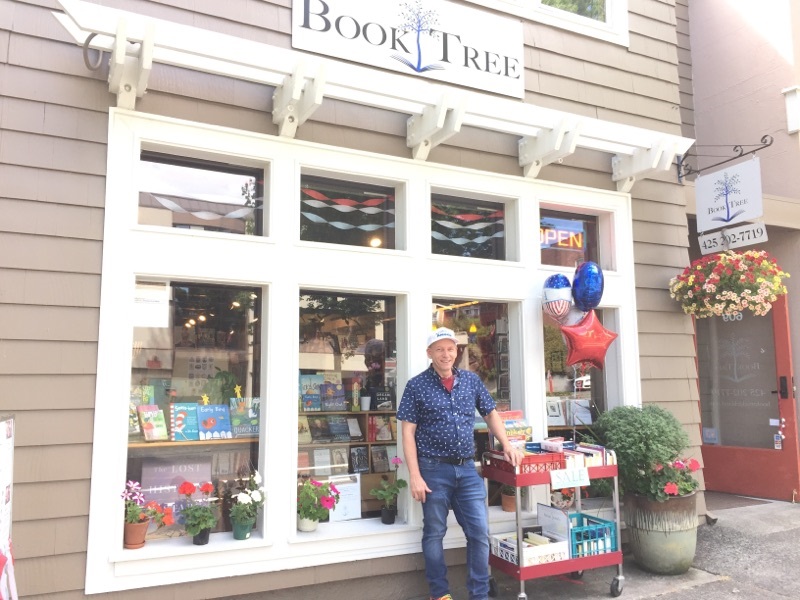
Christopher J. Jarmick is not only a marvelous poet, but a owner of the wonderful BookTree in Kirkland, Washington.

booktree

Click this Link to go to BookTree website 

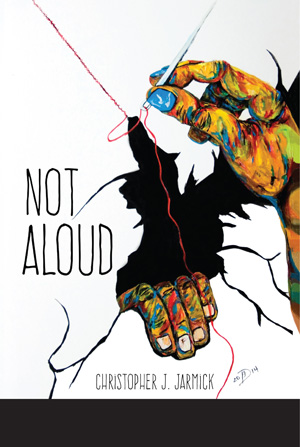
And I had the good fortune to publish his incredibly passionate collection Not Aloud with MoonPath Press.

9781936657193-Perfect-DRAFT.indd

A little more about Chris:

Christopher J. Jarmick is owner of BookTree, Kirkland’s independent book store. Creative and Freelance Writer, he’s author of Not Aloud (2015 MoonPath Press).

Visit him on his blog, PoetryIsEverything

Click this Link to Chris’ Poetry is Everything blog

jarmick

Before I get to the interview with Chris, I can’t help but post a favorite poem from Not Aloud.

CemetaryMeme

First question, Chris–

What brought you to poetry?

It happened in stages.  First Garden of Verses by Robert Louis Stevenson and Dr. Seuss.  Rhymes were fun.

 garden

Then I discovered Coney Island of the Mind by Lawrence Ferlinghetti when I was about 11.  I thought this is amazing.

This is poetry?

 ferlinghetti

Who is this guy?

And getting answers meant going to the library back in those pre-internet/Google days and asking questions.

 library

I learned about the ‘beats’ and this amazing poem called “Howl”:

 howl

I tried to understand more about these poems and poets and I became interested in their influences Blake, Baudelaire, Rexroth,Whitman (plus many many others and noticed some anti-war poetry from Denise Levertov and others).

 peace

I started writing poetry and got a poem published in a national magazine when I was 12 (Dear Troubled Youth).

 I must be a writer and poet, right?

And so I was bit.

 poet

I realized how poorly poetry was taught in schools (most of the time) and I would have soured to it if I had not made my discoveries and done research on my own.

-Mark Twain.

What is the best advice you received as a writer?

 Read.

 Read everything and remain curious.

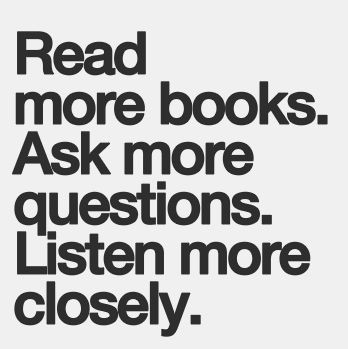
Read, observe, and listen.

how

You want to be open and truthful and develop your b.s. detector.

 ask

If you don’t like reading very much, you aren’t going to be a writer worth reading.

 king

‘Write every day’ is also very good advice.

Too many resist this one.

  bradbury

Write fast and edit later.

If you can’t just write, get a prompt and write to the prompt and challenge yourself.

 edit

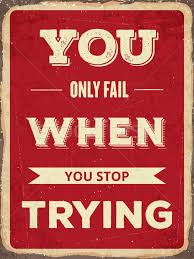
You learn more by failing than by being successful.

 fail

So fail often (hopefully in private).

It is important to also accept that it is okay to skip a day or two of writing.

Forgive yourself.  But no excuses.  No laziness.

 not trying

Develop the habit, the writing addiction.

 Get over yourself and write even if it is junk.

 You absolutely must read every day however.

 Read more, write often and accept that most of what you write will be awful.

 good

What is the least helpful advice you received?

 “Write what you know.”

Terrible.

 It should be:

Write and when you discover you don’t know what you are writing about—research, learn and then write some more.

 You don’t know, what you don’t know and you are always learning so why would you stick to writing what you know?

Zora

Writing is always a journey and journeys are supposed to be meaningful and that means you are learning as you journey; sharing and teaching as you write.

 As you experience life of course write about that, but let it lead you to new paths and new discoveries.

 journey

“Find your voice” is another bit of supposedly helpful advice that is also problematic.

 You already have a voice and while you absolutely need to explore and discover as much about yourself and therefore develop your voice, it is already a part of you.

 It’s the voice that is insisting you write.

 voltaire

You can write in different voices, you can be a mimic, you can stretch and should stretch until you are uncomfortable and then stretch some more.

 The true voice that you already have will tell you what is b.s. and what is honest if you remember to listen.

 hemingway

If you read and listen more than you write you’ll have an authentic voice– nothing to ‘find’, it’s already within.

voice listen

Most creative people go through difficult or dark times.

What helps bring you back up when you are down?

 Sheesh.

 If you get to your 30s or beyond and are a sensitive creative sort of spirit, then you have developed some coping mechanisms that are working.

 Managing frustration, foul moods, self-doubts and other things would be a full-time job if I didn’t develop a way to take a quick time-out.

 Get the hell out of my own head.

 head

Stop blaming others.  Fathers, mothers, husbands, wives, abusers… the blame game won’t let you heal.

 point

Deep breathing exercises a couple of times per day (5 minutes is often enough time) and some positive self-talk that isn’t too sweet or insipid is necessary.

All you have control over is how you will deal with the day.

In the photo a beach in Zanzibar at sunset where there is an inscription on the sand "Breathe Deeeply".

Let good things happen.

Let the good in.

There is also good around you that is yours for the asking.

So ask and take some of the good.

 see good

When darkness closes in I wonder if there is someone I have not forgiven that I am allowing to take control of my mood.

 You must forgive and stop carrying more weight around than you need to.

 easier (2)

There will be times when you might have to fake it for the benefit of someone near you that doesn’t need your dark mood.

 pain

The most difficult person to forgive is yourself but you must learn how to be better at that every day.

 forgive

There are some people that I used to spend time with who were very negative and overly critical.

 I can be negative and overly-self-critical without anyone’s help so obviously I learned that life is too short to spend too much time with very negative, ‘mean’ people.

 Most of these people weren’t close friends so it’s common sense to limit my time with them.

I don’t have to avoid them, its simply a matter of not spending too much time with them.

  negative people

One can also escape with a movie, or a book or by eating a little too much ice cream or playing music waaaay too loud.

art

I learned by my mid 20s that killing yourself slowly through drugs or alcohol is just another way of wasting time and being irresponsible.

It creates more problems and more darkness.

And too much escape will only create a super storm that will knock you on your ass.

 drug

Sometimes I recognize a dark cloud coming in and I can minimize its visit.

 I sometimes can be affected and even infected by my perception of someone else’s mood.

It may not even be completely real and I take it upon myself.  Foolish.

I tell myself it might make me a better writer but it doesn’t help my balance.

 down

Having a variety of ways to deal with the challenges is important.

Sometimes my methods are successful.  Sometimes it is being in the writing zone, writing away for hours at a time that keeps me somewhat sane.

 hard

What do you want others to know about your poetry?

 It is an exploration, a journey, a specific observation.

rumi

 It doesn’t take itself too seriously and the poem itself is not sacred—behind the scenes the act of writing the poem is sacred (often)—but you do not need to ever give a damn about that.

 playful

My poem is alive.

My poems (most of them) are cats, dogs, chickens, or insects.

cats

I would like the poem to allow you to consider or ponder or explore something differently.

 Many poems have done this for me and so I want my poems to do it for others.

 I would love if my poem assists you and what I think I mean by that is

a) it connects to you perhaps giving you a little more confidence or helps someone to feel a little less alone, a little less crazy

b) it inspires you

c) it makes you smile

d) it resonates because of how it states something or because of a meaning you see in the words

e) it makes you uneasy, it bothers you or makes you a little angry

f) bottom line: it compels you to react and do something (maybe even write).

 eyes

Some of the poems I write are fun, even show off a little, some are satiric, sarcastic and hopefully done with wit and respect for language.

 I hope a poem or two of mine will make the reader (or listener) think, okay that’s a little different AND it’s poetic.

 fun

A writer reads.

A writer writes.

 A poet as the word origin dictates: creates.

(Poesis~Greek word for creation is root of poetry).

 create

Here’s another poem by Christopher J. Jarmick:


LEARNING FROM LEONARD COHEN 


You learn

about best defenses;

keep tears back

with a smile;

never leave the heart out

upon your sleeve.


Some do get older

with vulnerable hearts.

The sparkle

in an eye proves

a passionate intense life.


It is a blessing,

a curse.

It is brave, very

foolish, human.


If you have met

a few who understand,

you are rich.


If your heart has been broken

more than twice

and still gives

you are living your life

very well indeed.

BROKEN

Click this link to buy NOT ALOUD from IndieBound

9781936657193-Perfect-DRAFT.indd

Click this link to buy NOT ALOUD from Amazon

Thanks to everyone for joining Chris and I here.

Wishing everyone brighter days filled with poetry and joy.

creativity

Poet Patricia Fargnoli Talks Writing, Love of Words, Advice

Patricia Fargnoli is simply one of the finest poets writing today.

And Pat’s an important person in my life.

I’m honored to host her on my blog. 

pat smile

Patricia Fargnoli, a former New Hampshire Poet Laureate, has published five award-winning books and three chapbooks.

Awards include: The May Swenson Book Award, The NH Literary Book Award, The Sheila Mooton Book Award, Foreword Magazine Silver Poetry Book Award, a runner up for the Jacar Press Prize, and a residency at Macdowell.

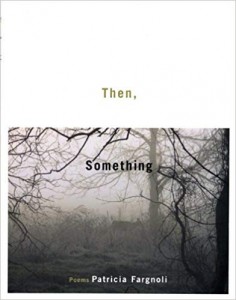
duties then winter

She has published over 300 poems in such journals as Ploughshares, Prairie Schooner, Harvard Review et. al.

Pat is a retired social worker and psychotherapist, a mother, grandmother and great-grandmother.

She lives with her cat, Rusty-Griffin in Walpole, NH.
rusty

I had the good fortune to become a student in the poetry classes she taught in New Hampshire.
keene

Pat was not only a marvelous teacher, but she took an interest in my work, and became my mentor and supporter and cheerleader.

mentor

And ultimately, Pat became my dear friend.

I will never be able to truly express the depth of my gratitude.

Pat’s belief in me is a part and parcel of every success I’ve had with publishing my work.

candle

Without further ado, Patricia Fargnoli:

Thank you to Lana Ayers for featuring my book, Hallowed: New & Selected Poems on her blog.

This month is the one-year anniversary of its publication.

Pat and book Photo on 8-28-17 at 2.41 PM #2

Health issues and issues of aging (I am 80) have prevented me from doing readings or publicizing the book the way I would have wanted to.

So I am so grateful to Lana for her interest in this feature.

How did you come to poetry?

Poetry became an important part of my life very early, largely because of the wonderful Aunt Nell who took care of me after my parents died.
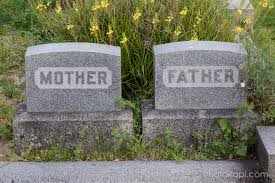
dead

She had been a kindergarten teacher for 40 years and loved children.

Each night, before bed, she would read to me: all the children’s classics, and books of poetry –“Silver Pennies,” “Peter Patter’s Owl,” “The 100 Greatest American Poems.”

silver

Thus, the rhythms and images of poems became part of me…as did the love of poetry.

I wrote my first poem at age seven on Mother’s Day.

It was for my mother and I asked Aunt Nell to somehow send it to her.

sun

Then, in high school, I wrote (very bad) poems for the school newspaper.

bad

I don’t remember writing during most of the years of my marriage and motherhood, but I never lost interest in poetry.

It wasn’t until my mid-thirties that I began to write seriously.

I somehow fell into a graduate poetry class with Brendan Galvin at Central Connecticut College and took it several times.
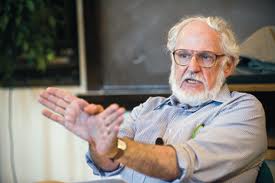
bg

Brendan, who is a remarkable poet, and not easy to please, taught me to write well. I was determined to become a good poet and worked hard.

There were seven other women in that class; we all became friends and, after we stopped taking the class, we continued to meet and critique each other’s work.

support (2)

Still, the group is meeting, 35 years later.

For financial reasons, I’ve never been able to get an MFA (though I wanted to).

I did, however, attend The Frost Place Poetry Conference and the Bennington Summer conference both of which brought me into contact with well-known poets and expanded my poetry knowledge and world.

The_Frost_House

Most importantly, I studied at Bennington with Mary Oliver who recognized the value of my work

and became a mentor and supporter of me.
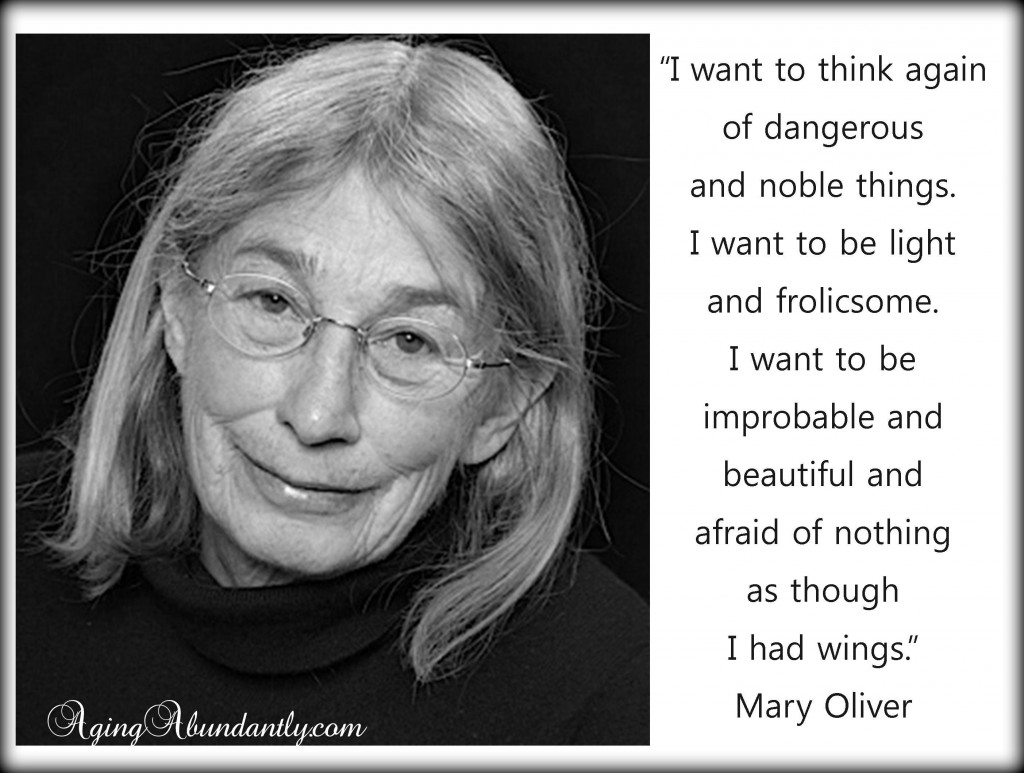
mary

Her belief in me has been a lifelong motivator for me

and I am enormously grateful to her.
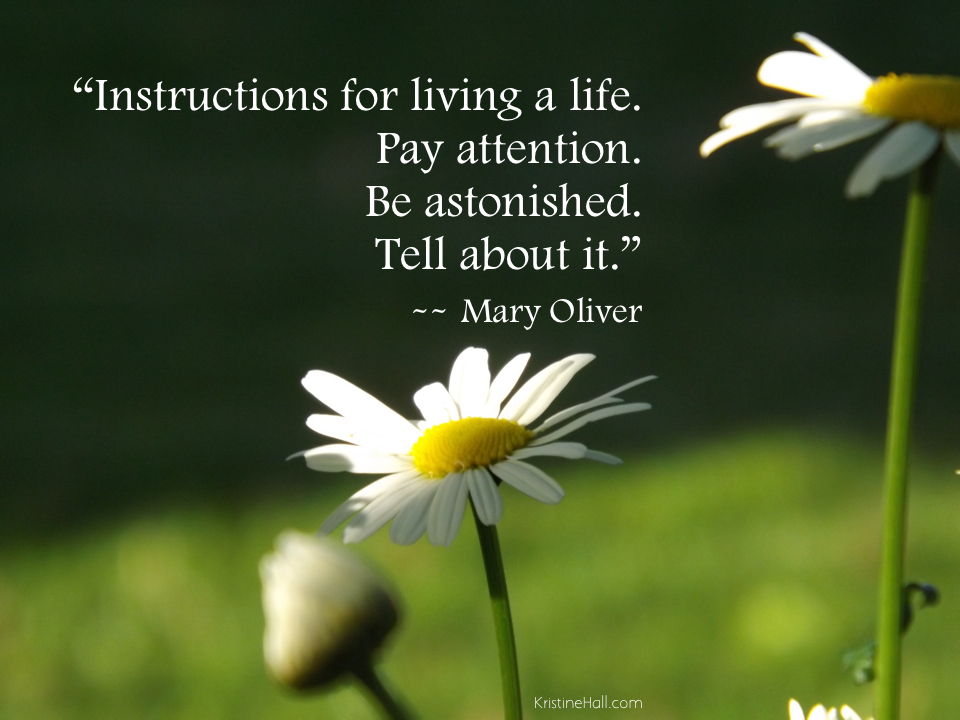
mary advice

My first book was published when I was sixty-two.

nec

[I can’t help but interject here folks — First book at age 62!

Winner of the  May Swenson Award!

This fact uplifts me greatly coming so late to fiction.

There’s still hope for me & for all of us late bloomers.]
sharon

What is the process like creating a new & selected works? Has your relationship to the earlier poems shifted? Have you discovered anything new in the process?

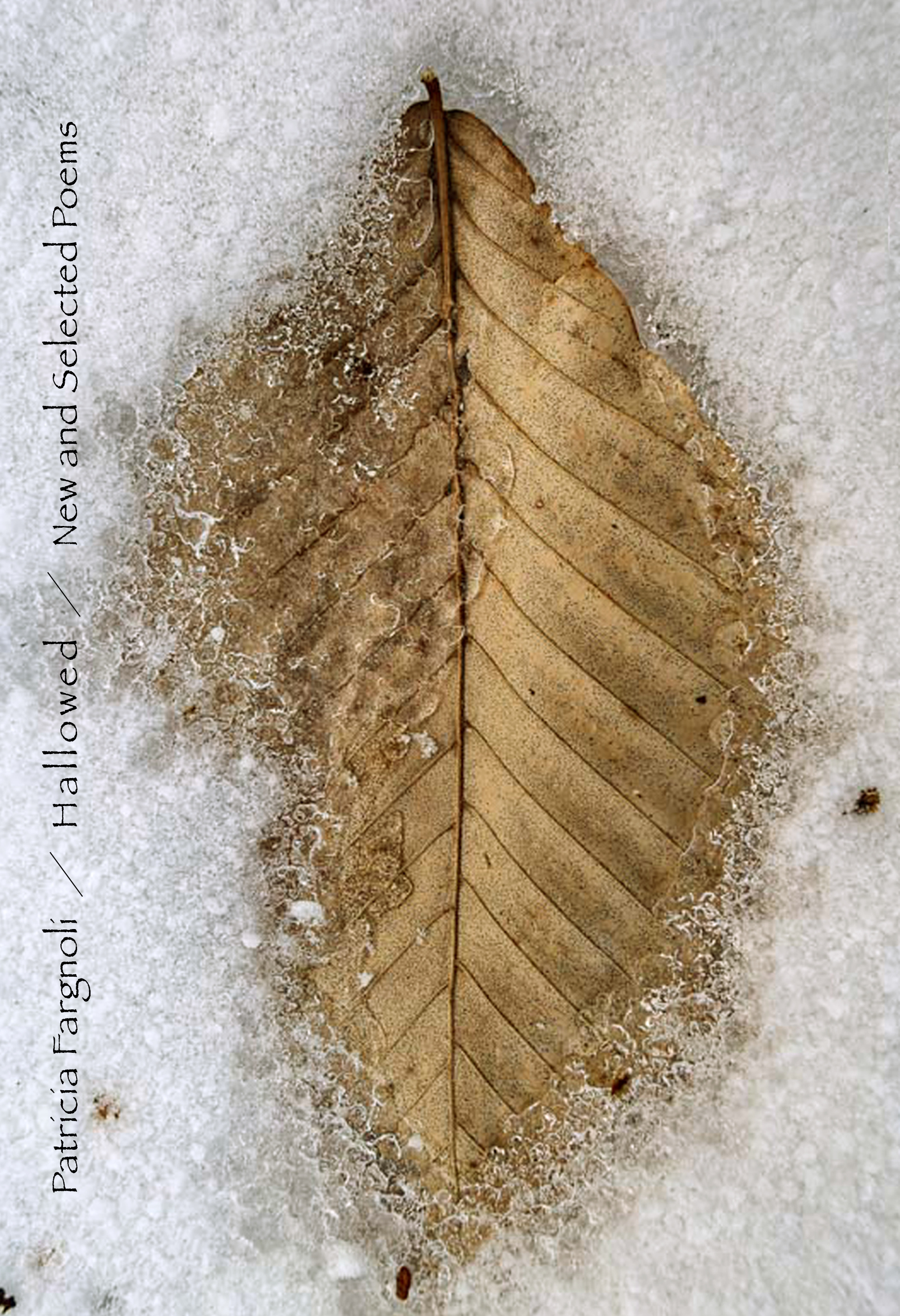
This is the one year anniversary of the publication of Hallowed: New & Selected Poems 

so it is a good time to reflect on the process of creating it.
book

I knew that I wanted to have a volume that recognized my previous books while it also included the new work I’ve written since Winter was published.

And I wanted to do it by my 80th birthday so as to recognize that scary (to me) landmark.
set

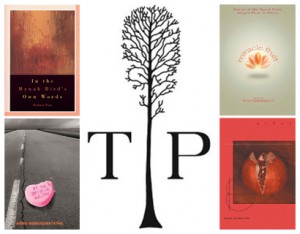
I contacted my previous publishers for permission to use poems from those books and Jeffrey Levine at Tupelo Press said that they wanted to publish it since they had published two of my previous books and considered me to be part of “The Tupelo Family.”
tupelo

The process of putting the manuscript together was quite easy: I simply chose the best of the new poems I’d written…24 of them, and then arranged them as I would arrange the poems in any book… paying attention especially to the first and last poems but also to the arc of the them and how they connected to each other.

apple

Choosing the poems from previous books was even easier. I knew that I wanted a representative sample from each book, but didn’t want a lot of poems from each book…so I went through each front to back, choosing poems that seemed to encompass the themes of that book and that had gotten recognition through audience appreciation and/or publication…plus those that were personal favorites.
fave

A friend pointed out that I left many strong poems behind and I guess I did but I didn’t want the book to become too long.

behind

What I learned was that some of my themes are lifelong themes: especially grief and loss, how to find meaning and beauty in nature and life, those consolations.

UrnV2

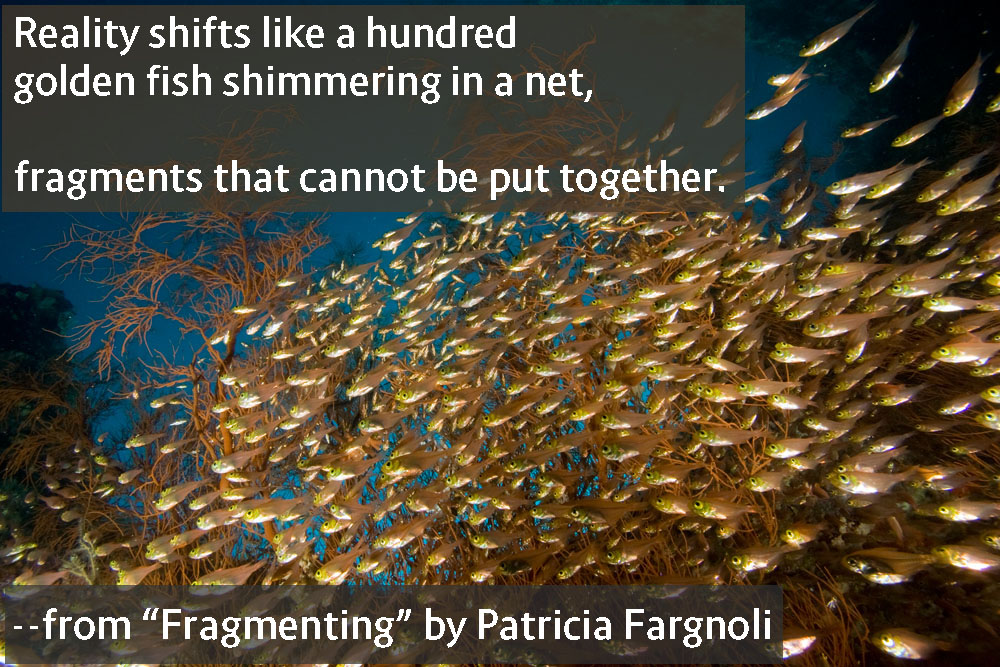
I also recognized that the poems of the first book, Necessary Light, tend to be more narrative than those of later books which tend first toward my lyrical and later to more and more meditative as I aged and began to be more concerned with issues of aging and with the search for spirituality and meaning in a world where there are no (for me at least) certain answers.
Fragmenting

Amazingly, when I had finished the choosing and arranging, the poems from all the books seem to become a cohesive book….something that both surprised and delighted me.

Beautiful sunrise over volcanoes in guatemala

Could you share a poem from the new collection?

To an Old Woman Standing in October Light

Better to just admit it, time has gotten away from you, and yet
here you are again, out in your yard at sunset, a golden light draping itself

across the white houses and mowed lawns,
the house-tall maple, green and rust in ordinary light,

has become a leaf-embossed, gold globe, the brook runs molten,
the clouds themselves glow gold as the heaven you used to imagine.

Do you know that your own figure, as Midas-touched as a Klimt painting,
has become part of that landscape falling around you,

almost indistinguishable from the whole of it–
as if eternity itself were being absorbed into your mortal body?

Or is it that your body, out of time, is merged into eternity?
You have been looking for a reason for your continued existence,

with faith so shaky it vibrates like a plucked wire.
Such moments of glory must be enough. As you search them out again, again,

your disappearing holds off for awhile. But see how, even in this present,
as you stand there, the past flies into the future seamlessly,

the way, above you, the crows are winging home again, calling to each other,
vanishing above the trees into the night-gathering sky.

crow

[Buy Patricia Fargnoli’s book by clicking this link!]

How did this poem come about?

This is the first poem of the book.

The “you” in the poem is, myself as I stand at the precipice of old old age, but also it reaches out to the reader who may be also dealing with issues of aging and meaning.

I wanted to write a poem that used beautiful language and light and spirituality.

nature sky clouds sunset golden night wallpaper 1920x1080 Elegant A flock of birds flying ahead the sunset birds flying

I don’t remember much of how I wrote it but I think I must have been in that poem-space where images and words come almost unbidden.

PinskyV2

What advice were you given that was the most helpful when you were first showing your poems to others (in classes or workshops or critique groups? 

It’s been 45 years since I first began showing others my poems and my memory is not that long.

I think the most important advice I could have been given is to be quiet and listen without getting defensive but, at the same time; to consider carefully all that is said.

listen

Always remember that the poet is the final authority (and decider) about their own work.

choose

Any really bad advice that didn’t help at all, and if so, how did you overcome it?

As for bad advice: negative critiques especially when given forcefully by someone who is sure their opinion is “right” have only left me upset afterwards.

These are not supportive and can be very difficult to shake these off.

I have left critiquing workshops where this happens frequently.
STRONG

Fortunately, I have been a member for many years of a very supportive and helpful in-person workshop and also an online one where I trust the feedback I receive.
success
What advice do you have for poets who are struggling in some way–either with getting poems written or with getting published?

I know this is said often but it is so true: read, read, read…all the poetry (both American and International) you can get your hands on.

read

And study the poems that you are most drawn to, not just as a reader, but as a student learning from their techniques and moves, their language and strategies.
learn

Also read fiction and non-fictions, read magazines, let all that you read become food for your own imagination.

read every

Make writing a priority in your life, make time on a regular basis to do it even if you think you have nothing to say.

priority

Study the journals before you send work to them in order to decide where you own work might fit.

lit mags

Build a poetry community.

Some poets are loners, I, myself, am an introvert, but I have found that it’s important for me to have a tribe of poets, people I can turn to to talk about poetry, share successes, even moan about failures.

tribe (2)

Thank you, Pat for bringing your beautiful, wise, and enlightening words to my blog.

Thank you readers for coming along.

Please check out more on Patricia Fargnoli here: [Patricia’s website]

WatchingLightV2


Flailing in the Abyss

Putting my own words on paper

holds
and reading the words of others

reading makes

are the 2 best ways I know how to cope with the awfulness happening in the world.

And just when I think it can’t get worse…

worse 2

it does get worse.

But all the awfulness all around us — is us!

real monsters

There are times even words, no matter how beautiful, fail to lift me from the abyss.

petrichor

I know we must continue doing our best in the face of so much awfulness.

do good

We must resist and persist and work to right wrongs.

nothing

But sometimes the scope of injustices breaks me .

silence

Many people feel too much. Psychology Today called this “Reactive Empathy.”

But the trouble at the root of all this awfulness is a dearth of empathy?

jose

A dearth of empathy allows us  to judge and harm one another even though we are all the same.

Why isn’t empathy as hard-wired as hunger?

empathy

Has evolution failed the human race?

Wouldn’t empathy make us the most adaptive?

change

Isn’t empathy a better tool for survival of the species than apathy or self-interest?

love heals

I’m not thinking clearly.

Science befuddles me. 

I know the answers are complicated.

clear

Right now, I’m flailing in the abyss the world is.

Maybe words do help. A little.

I’ll grab onto these Vonnegut words right now and try to stop flailing.

loved


“Didn’t everyone standing in a crowded elevator imagine how someone could be murdered?”– author V. M. Burns

I’m so excited to have my favorite Cozy Mystery author

and now dear friend

V. M. Burns visit me here on my blog.

valerie

She talks about how she came to write such wonderful mysteries

valerie book 1

and gives fellow aspiring authors the wisdom of her experience.

valerie book 2

Why cozy mysteries?

I’ve loved cozy mysteries for as long as I can remember.

From Encyclopedia Brown and Nancy Drew to Agatha Christie, I love reading and figuring out whodunit.

nancy drew

How did you come to write cozies?

The transition from reading cozies to wanting to write them was subtle.

I don’t recall saying, “one day, I’m going to write cozy mysteries.”

However, there were two glaringly obvious clues which pointed to career as a writer.

clue

First, I mentally altered book/movie endings.

For as long as I can remember, I indulged in what I called, “my imaginings.”

If I finished a book and didn’t like the ending, I changed it.

could have

If I watched a movie and thought the characters should have behaved differently, I “imagined” an alternative.

Or, if I read a book and wanted to know what happened next, I imagined the sequel.

to be cont

At the time, I had no idea this would lead to a life as a writer.

I thought everyone came up with ideas for books/movies or thought out alternative endings and sequels.

Didn’t everyone standing in a crowded elevator imagine how someone could be murdered?

elevator

In addition to an active imagination, I also kept a mental “I wish there was a book” list.

wish list

I wish there was a book about a woman who owned a mystery bookstore who solved mysteries.

I wish there was a book about a policeman and his godmother who solved murders.

I wish…well, you get the idea.

wishing

One day, I told a screenwriter friend, one time too many, that she should write a screenplay about…

That’s when she suggested I should write it myself.

make it so 2

Once the seed was planted, I couldn’t dig it out.

I got every book I could find about writing.

book-tree

Initially, I wrote screenplays and children’s books. I attended conferences and workshops and I wrote.

I completed four screenplays and two children’s books.

Unfortunately, no one was interested in producing my screenplays or publishing my children’s books. I got a lot of rejections.

rejection 1

I still read cozies and decided to write my first cozy screenplay, “Agatha and the Mysterious Museum Murder.”

Yep, no one was interested in that one either.

Hollywood is hard to break into, especially from Indiana.

rejection 2

A series of events led me to the Maui Writer’s Conference where I met book authors and publishers.

maui

At the conference, I pitched an idea for a book to a big five publisher and guess what?

She liked it.

The only problem, I hadn’t finished the book. So, I went home and wrote my first cozy mystery.

Thankfully, I write quickly. So, I finished the book and thought, my road to publication was secure.

road to pub

Uh…no. The publisher only accepted manuscripts submitted by an agent.

I sent queries to agents and got rejection after rejection.

rejected

Eventually, I got an agent who sent my manuscript to the big five publisher, who rejected my manuscript.

rejection quote 3

How did you keep going in the face of rejection upon rejection?

At this point, I knew what I wanted to do with my life.

I wanted to be a mystery writer.

So, I continued to send queries.

rejection quote 4

What was your road to publication like?

“I revised my manuscript and I wrote the next book in the series.

red herring

Years passed and I racked up a lot of rejections.

Obviously, I needed to do something different.

rejection quote 5

One day, while glancing at the bio of one of my favorite cozy mystery writers, Victoria Thompson, I noted she was an adjunct professor at Seton Hill University in Greensburg, PA.

Ever heard of it? Me neither.

seton hill u

A little research showed that Seton Hill had a low residency MFA program in Writing Popular Fiction.

I applied and was accepted. That’s where I found my Tribe.

the tribe

I learned how to write and I rewrote my book.

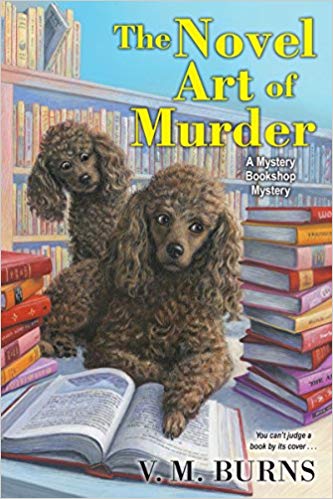
Since I write quickly, I even started a new mystery series (Mystery Bookshop Mystery).

novel art

MFA degree in hand, I sent queries to agents, editors and publishers and guess what?

I got more rejections.

Nevertheless, I kept writing.

rejection quote 6

Eventually, I got an agent who sold the second manuscript to a publisher who asked if I’d write a proposal for another mystery series.

Heck, yeah.

yes-finally

I also sold my first book to a different publisher.

trav

When all was said and done, I was under contract to write fourteen books!

Yes, you read that correctly, 14!

acceptance-journey

What advice would you give other aspiring writers?

So, what’s the key to my publication success?

I kept writing. I didn’t give up because of a rejection or two or three hundred.

My road to publication was long and rocky with lots of bends, but persistence pays off.

rejection-isnt-failure-failure-is

My advice to aspiring authors, don’t give up and no matter what happens, just keep writing.

just keep writing

V. M. Burns author page  — check out V. M. Burns’ author page to see all her books!

And check out her own blog here V. M. web site


The Best Laid Plans…

My sweet husband decided that the publication of my very first novel deserved to be celebrated.

In grand style!

entrance to golf course

So my husband rented a small function room at our local golf course.

And we invited our neighbors and friends here in Tillamook to come share a delicious salmon dinner.

salmon

My hubby even had this nearly life-sized blow up of my book cover made up to decorate the room for the celebration.

Andy with sign smaller

It was going to be a wonderful celebration.

And for once, I wasn’t even nervous about having to be the center of attention–like I always am when I have to stand up in front of a room full of people.

nervous

When my first poetry collection came out, I seriously considered hiring a stunt double to give the readings for me.

look alikes

(okay, I don’l look like Bowie or Tilda, but you get the idea)

But this time, I was genuinely excited and wanted to celebrate, even if I was going to read a snippet from the book.

snippet

I picked out a polka dot dress to wear because it seemed fun for the occasion without being too formal.

And a purple lace bolero to wear over it.

polka dot dresspurple

But you read the title of this post, so you know something went awry.

The party went off without a hitch. People had a lovely time. So what went wrong?

party goers

Well, only the fact that I couldn’t attend my own party!

Nope.

My body decided to betray me in the wee hours of the morning the day of my party

with excruciating pain.

I ended up in the hospital.

emergency room

I’m doing better now, after a couple of days in the hospital getting test after test after test.

Diagnosed with an intestinal blockage, I’m recovering slowly.

I may need exploratory surgery if things don’t completely resolve on their own. Hope not.

no surgery

But for now, I’m okay.

Except I’m completely, totally, thoroughly bummed

that I missed my own book celebration party.

sad baby

My first thought was I didn’t deserve a celebration, anyway.

My second thought, too.

mothers voice

That’s my mother’s voice in my head talking. It’s nearly impossible to shut her up.

My next thought was The universe hates me.

universe hates me

The universe isn’t out to get me. That’s just silly.

I am just an insignificant speck in the scheme of things.

the-universe-you-are-here

The Universe doesn’t care a whit about me.

So, here I am feeling pretty sorry for myself.

pity party

How lame is that?

What I should really be feeling is grateful.

grateful

Grateful to have people in my life who wanted to celebrate with me.

Grateful to be alive.

At all.

be alive

And I am.

I am grateful to be here, for however much more time I am granted.

run down

Guess, I am just going to have to do something else worth celebrating.

Maybe write another book?

Or another half-dozen books?

desk

I better get started, huh?

Wish me luck!

prep


A Guest Post from Stacy W. Dixon!

Hello lovely blog readers, I’m being visited by the wonderful poet Stacy W. Dixon this week.

Stacy W. Dixon’s work has appeared in The Mid-America Poetry Review, Tiger’s Eye, Pirene’s Fountain, Sweet Tree Review, Word Fountain, and has been nominated for a Pushcart Prize.

stacy dixon

She’s writing about her new poetry collection, Visiting Ghosts and Ground.    buy on Amazon

stacy book

Stacy wowed me with her clear-eyed and powerful poems of grief.

Take it away, Stacy:

“I think we naturally write about how we experience life. My work is often intimate and personal, though not always autobiographical.  I am inspired by many things; art, nature, memories, dreams, and family. 

water lily

The poems in Visiting Ghosts and Ground begin in adulthood and then turn back to childhood memories.  My mother and grandmother, and the effects of their loss upon my life, inspired some of these poems.  A few of them are influenced by my ancestors, such as Kindred Incantations, Shelf Life, and From a Stolen Child

hands

I feel this collection is largely about connections to the land and the ghosts of the past.  It’s a journey of love and loss, and the desire to keep that love alive.

love and loss

 My hope is always that my work will resonate with others, as so many poets and writers have touched and inspired my own life.”

blue light

Thank you, Stacy, for your poems and your post. As in your lovely lines, “Long days/on end/in the bluish hue,” your collection will resonate with anyone who carries loss in their heart. 

Visit some of Stacy’s inspiring work online here:

Inheritance

& here:

Superimposed

& here:

Night Muse

As always, thanks for stopping by.

thank you


“Do you really want to write a beach book?”

“Do you really want to write a beach book?”

was the question posed to me by an international best-selling crime fiction novelist in her writing workshop where participants read a few pages of their works in progress.

Her tone was accusatory.

slap cheek

Honestly, I felt like I’d just been slapped.

Hard. On both cheeks.

I’ve no doubt my face colored.

I was crestfallen. Every writer hopes for approval from authors they admire. Or at least, constructive criticism.

judged c

I felt judged as lacking.

I felt publicly shamed.

I don’t even know if I answered her.

I was just doing everything in my power to keep from bursting into tears.

meaningful

I tried very hard to hear what she was saying as meaningful feedback.

But she wasn’t critiquing my writing, but the content of my writing.

What I hadn’t realized at the time, was I was running into the great divide, previously unknown to me–

Literary versus Genre Fiction.

lit vs genre

And genre fiction, like my romantic time travel adventure novel, according to her was not worthy of wasting time writing.

(And isn’t crime fiction, genre fiction too? Well, not hers I guess.)

I’ve been writing poetry since I could hold a crayon. But that was okay, because poetry is considered literary?

poetry b

Call me naive, but I didn’t realize there was such animosity between literary writers and genre writers.

To me, good writing is good writing.

And I’ve always read both literary and genre fiction without placing any value judgment on the worthiness of either.

I like what I like. And I like a good story.

once upon

I like books that transport me to other worlds, other lives, other experiences than my own.

bradbury

Books that make me think, and feel, and understand something new.

kindred

Books that take me out of my own mental anguish and bring joy.

p and p

Both literary and genre fiction can do those things.

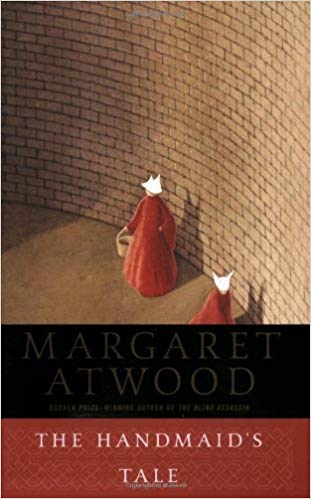
handmaid

So why decide one type of writing is better or more worthy than the other?

Why is only “literary” worthy or merit

and

who defines what is literary and what isn’t?

better

I wish I had stood up to that author.

I wish I had said, “All writing matters.”

proper lit

I wish I could go back in time, and say to that author who shamed me,

“Yes, I really want to write a beach book.”

And now I have.

I wrote the book I needed and wanted to write.

And I’m glad I did. Hopefully, some readers will be too.

FrontCover159BoxFlat


Family Poems Are Hard–part 3–final part

I left off part 2 of Family Poems Are Hard saying I thought I was done writing family poems after my first full-length collection, Dance Inside My Bones.

DanceBonesFrontCover

In the book, I have lots of poems about growing up in a difficult family situation.

Like most of us, I suspect.

There is no such thing as a perfect family.

And maybe, not even a normal one. What’s normal, anyway?

normal

There are poems about my mother, my father, my brother, grandparents, uncle, friends, and boyfriends in Dance From Inside My Bones.

There are poems about the state of my heart and mind, from childhood to young adulthood.

So what else was there to say?

no words

Mostly, all my relatives were alive when I wrote and published the collection. They didn’t read it.

Then, over the years, loved ones started dying off.

Some, of awful lingering illnesses.

LONDON, ENGLAND - MARCH 02: The shadow of a cemetery worker is cast on reclaimed gravestones in London City Cemetery on March 2, 2009 in London, EnglandThe cemetery is piloting a scheme whereby graves over 75 years old become eligible for reclamation. New bodies will be placed into the existing graves, the headstones turned around re used carving the names of the newly deceased. Once a grave has been earmarked by English heritage the cemetery must wait one year to see if family members claim the existing grave. By conserving as many memorials as possible the City of London hopes to maintain the historic cemetery landscape and sustain buriel provisions for the future. (Photo by Dan Kitwood/Getty Images)

Grief  is always hard. Grief over difficult relationships ending, is especially complicated.

Complex & powerful.

My brother, who had helped with rescue endeavors on 9/11, was diagnosed with a rare, likely incurable leukemia.


00585_p_s9acrwl7fs0424_z

My brother and I had never been able to be close growing up because my mother pitted us against one another. She was a master of hateful mind-games. And she forced my brother to to inflict physical punishments on me, as well.

This did not inspire a deep, loving relationship between us, as you can well imagine.

But with my brother’s fatal diagnosis, I realized time was short. If I was ever going to have any meaningful dialogue with my brother, it had to happen soon.

time out

In what turned out to be the last eighteen months of my brother’s life, we talked–

really talked–a few times.

We said things, I never knew were possible.

That brief time was such a gift. A tremendous gift for which I will always be grateful.

heart gift

And then, my brother died, after living his last days with a grace I never imagined possible.

A hero in life, and in death.

There was so much I never got to ask him. Or to say.

So much about our relationship I still needed to process.

So I took up my pen.

write left

I took up my pen because writing is how I process my emotions.

Writing is how I sort what I am feeling and thinking.

I wrote “dead boy” poems because my brother died too young.

Because all my memories became entangled with his too-early death.

headstone

I never intended to publish these poems.

But I did share a few at readings.

Listeners asked me about where they could find these poems in print.

(nowhere)

Still, I didn’t really plan on a book.

And then, a year later, my mother died.

dead mother

My mother died in her sleep. Peacefully.

Unlike my dear father who suffered a horrible lung cancer death.

Unlike my aunt who suffered a terrible, ongoing battle with cancer.

Unlike my dearest friend who died too young–bled to death on the operating table during a procedure meant to extend his life.

Unlike my best friend, who had a bad headache that turned out to be an inoperable brain tumor.

Unlike my brother, who fought the illness as hard as he could, for as long as he could.

death unfair

I was relieved my mother hadn’t suffered.

But angry all over again that other people I loved had.

To be honest, I was glad to be free of my mother. At least this side of the earth.

But her hurtful words live on inside me–make me doubt myself and my self-worth.

So why the bejeezus was I crying so much?

cry

Because fresh grief re-opens old wounds.

Shreds them, actually.

I kept going over family and over family stuff in my head, like a dog scratching at fleas.

scratch

And more poems came.

Because there was more to say about family.

And I was willing to speak my truth because it was mine.

truth

If people would judge me harshly over that truth, it no longer mattered.

Because deep inside, I knew from reading my first book of family poems in public, that sharing my family situation could make another person feel less alone. Feel they could get through the worst of it.

less alone

And so, I went ahead and published the new family poems in journals.

I read the poems at readings.

And eventually, I let the book enter the world.

dead boy

I have no regrets.

The Dead Boy Sings In Heaven is for my brother.

And for anyone else who comes from a difficult family.

I believe if my brother could see the book, he’d give me a hug.

And he’d tell me that the Godzilla poems were his favorite.

(Mine too.)

godzilla and friends

Though family poems are hard…

family poems are healing.

healing

Thank you for reading this far, and listening to my heart.

May you always find healing whenever your heart hurts.


Family Poems Are Hard–part 1

You’ve heard me say before, poetry saved my life. It did. It does.

Reading and writing poetry, both.

I’ve been writing since I could hold a crayon.

crayons

And because things were difficult for me at home, many of the poems were about family issues.

Family poems felt important to write.

But the hard part was not being able to share them with anyone.

The content of those poems felt shameful. Secrets that needed to be kept. Too dangerous to reveal.

art w

For many years, I wrote poetry just for me.

And read whatever collections I found at that struck my fancy–Sharon Olds, Pablo Neruda, Anne Sexton, Phillip Levine, Adrienne Rich, Emily Dickinson, Lucille Clifton, and many others.

luc cl

But in 1987, I wanted my own poems to matter. I wanted to learn how to write well.

So I signed up for a poetry workshop at the Boston Center For Adult Education with instructor Ottone “Ricky” Riccio.

To this day, Ricky remains one of the finest teachers I have ever known (and I have 5 official degrees, so that’s really saying something). He was firm, but kind. Gentle, but direct. He was a humanitarian and he took such joy in his students’ work. He was humble and loving and generous.

Ricky truly opened the door to writing poetry and welcomed me over the threshold.

His how-to book on writing poetry remains a bible for me:

int art po

https://www.amazon.com/Intimate-Art-Writing-Poetry/dp/0595093809

When I moved from Boston to New Hampshire, I discovered another amazing poetry mentor offering classes–Patricia Fargnoli.

You know how you secretly wish someone would tell you that you were special, that you had talent?

Pat believed in me. She told me what I wrote mattered. She encouraged me to start sending work out. To put together a collection. She wrote me a glowing recommendation when I decided to pursue an MFA.

Patrica Fargnoli remains my mentor, my friend, my poetry mother. I can never repay all she has given me.

DanceBonesFrontCover

Thanks to Pat, family poems were the first collection I assembled, though not my first to be published.

Little did I know what it would feel like to have this book in the world…

[stay tuned — Family Poems Are Hard — part 2 coming soon]


The Road Paved With Rejection

Rejection never gets easier. Not for me. I know rejection is the more likely outcome whenever I submit a completed poem or fiction piece or essay.

If for no other reason, than because of the sheer quantity of writing being submitted everywhere. Publications have limited space and unlimited selection. It’s a numbers game.

Rejection Just Ahead Green Road Sign with Dramatic Storm Clouds and Sky.

But when rejection comes, it always feels personal. Even though I understand from a rational standpoint that it isn’t. I feel like I am being told I suck. I don’t matterNothing I do matters. I am the worst writer in the world. Maybe the universe.

As an editor myself who has to parcel out rejection–something that hurts as much as receiving it–I know rejection is about the taste of the people choosing. And their mileage may vary from my own.

Rejection is subjective. Taste is individual. Not absolute.

Editors’ differing aesthetics, their biases, having to read the thousandth dead grandmother poem that month. And their grandmother is in the hospital. And she may not live. Or maybe that editor just discovered their father cheated on their mother with a person who has the same unusual first name as me.

Whatever the reason, rejection still hurts. And for me, it’s a physical pain as well. A blow to the chest, making it hard to breathe. Which makes sense according to MRI research. Rejection lights up the same areas in the brain as physical injury. There’s a great article on the TED site by psychologist Guy Winch that talks about this: Why rejection hurts so much

guy_winch_ted_dawn_kim_rejection_120615

The good news is, once I catch my breath, I’m ready to try submitting again. Mostly because of the voice in my head. Thankfully, that voice belongs not to me, but to my very first poetry mentor, Ottone “Ricky” Riccio, who taught at the Boston Center For Adult Education for several dozen years.

Ricky said, “Don’t call yourself a poet until you’ve received a thousand rejections.” What he really meant was that success at submitting doesn’t make you worthy. Passion for writing makes you a poet. And if you have enough passion that you’ve submitted a thousand or more times, you’ve got what it takes.

By these guidelines, I can call myself a poet many times over. Thousands of rejections.

Ricky didn’t place much value in the hierarchies of literary publishing. He encouraged sharing your work, but getting it out into the world any way you could. He suggested students take a handful of magnets and post poems on the refrigerators in the appliance section at Sears.

Ricky was an early proponent of self-publishing. Way before print-on-demand came into being. Many of his photocopied, hand-stapled collections stand among my all-time favorite poetry collections.

dealing with rejection

In my heart, I know sharing work matters. During my childhood, growing up in harrowing conditions, poetry saved my life. It still does. Every day.

As a child, I saw how people who’d suffered loss, and tragedy, and all kind of hurt, wrote about their experiences in poems. Across distance, time, gender, culture, these folks spoke directly to my wounds. They lived to write about what they’d been through–a testimony to survival, and likely, even thriving.

I’ve come to believe that our words reach those who need them most. However that happens–whether publication in a literary journal, or in the community newsletter, or posting online.

Poetry is my spiritual practice. Getting work into the world is a necessary part of that practice. Rejection is a piece of it as well. And the hurt. So I rest, take some deep breaths, and keep on. I hope you will too.

heart road