My ticket to hop aboard the Mars Rover in 2020







(where to get a copy of Lana’s book)


 ,
,


Patricia Fargnoli is simply one of the finest poets writing today.
And Pat’s an important person in my life.
I’m honored to host her on my blog.

Patricia Fargnoli, a former New Hampshire Poet Laureate, has published five award-winning books and three chapbooks.
Awards include: The May Swenson Book Award, The NH Literary Book Award, The Sheila Mooton Book Award, Foreword Magazine Silver Poetry Book Award, a runner up for the Jacar Press Prize, and a residency at Macdowell.


She has published over 300 poems in such journals as Ploughshares, Prairie Schooner, Harvard Review et. al.
Pat is a retired social worker and psychotherapist, a mother, grandmother and great-grandmother.
She lives with her cat, Rusty-Griffin in Walpole, NH.

I had the good fortune to become a student in the poetry classes she taught in New Hampshire.

Pat was not only a marvelous teacher, but she took an interest in my work, and became my mentor and supporter and cheerleader.

And ultimately, Pat became my dear friend.
I will never be able to truly express the depth of my gratitude.
Pat’s belief in me is a part and parcel of every success I’ve had with publishing my work.

Without further ado, Patricia Fargnoli:
Thank you to Lana Ayers for featuring my book, Hallowed: New & Selected Poems on her blog.
This month is the one-year anniversary of its publication.

Health issues and issues of aging (I am 80) have prevented me from doing readings or publicizing the book the way I would have wanted to.
So I am so grateful to Lana for her interest in this feature.
How did you come to poetry?
Poetry became an important part of my life very early, largely because of the wonderful Aunt Nell who took care of me after my parents died.
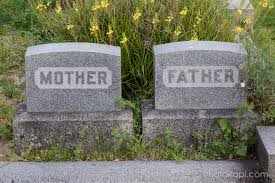
She had been a kindergarten teacher for 40 years and loved children.
Each night, before bed, she would read to me: all the children’s classics, and books of poetry –“Silver Pennies,” “Peter Patter’s Owl,” “The 100 Greatest American Poems.”

Thus, the rhythms and images of poems became part of me…as did the love of poetry.
I wrote my first poem at age seven on Mother’s Day.
It was for my mother and I asked Aunt Nell to somehow send it to her.

Then, in high school, I wrote (very bad) poems for the school newspaper.

I don’t remember writing during most of the years of my marriage and motherhood, but I never lost interest in poetry.
It wasn’t until my mid-thirties that I began to write seriously.
I somehow fell into a graduate poetry class with Brendan Galvin at Central Connecticut College and took it several times.

Brendan, who is a remarkable poet, and not easy to please, taught me to write well. I was determined to become a good poet and worked hard.
There were seven other women in that class; we all became friends and, after we stopped taking the class, we continued to meet and critique each other’s work.

Still, the group is meeting, 35 years later.
For financial reasons, I’ve never been able to get an MFA (though I wanted to).
I did, however, attend The Frost Place Poetry Conference and the Bennington Summer conference both of which brought me into contact with well-known poets and expanded my poetry knowledge and world.

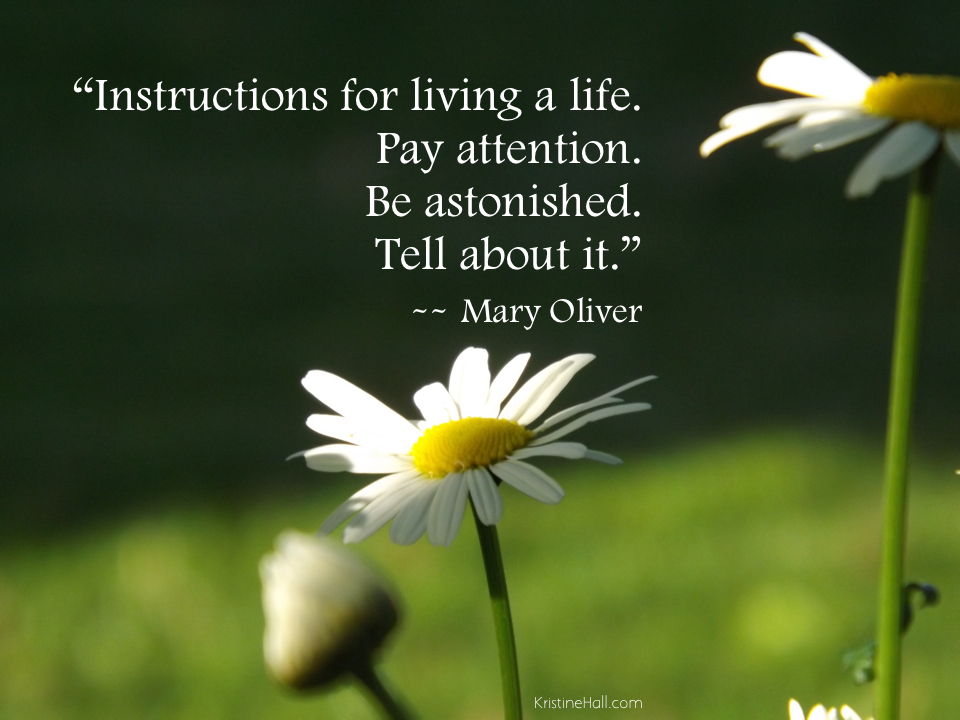
Most importantly, I studied at Bennington with Mary Oliver who recognized the value of my work
and became a mentor and supporter of me.

Her belief in me has been a lifelong motivator for me
and I am enormously grateful to her.
My first book was published when I was sixty-two.

[I can’t help but interject here folks — First book at age 62!
Winner of the May Swenson Award!
This fact uplifts me greatly coming so late to fiction.
There’s still hope for me & for all of us late bloomers.]

What is the process like creating a new & selected works? Has your relationship to the earlier poems shifted? Have you discovered anything new in the process?
This is the one year anniversary of the publication of Hallowed: New & Selected Poems
so it is a good time to reflect on the process of creating it.
I knew that I wanted to have a volume that recognized my previous books while it also included the new work I’ve written since Winter was published.
And I wanted to do it by my 80th birthday so as to recognize that scary (to me) landmark.

I contacted my previous publishers for permission to use poems from those books and Jeffrey Levine at Tupelo Press said that they wanted to publish it since they had published two of my previous books and considered me to be part of “The Tupelo Family.”

The process of putting the manuscript together was quite easy: I simply chose the best of the new poems I’d written…24 of them, and then arranged them as I would arrange the poems in any book… paying attention especially to the first and last poems but also to the arc of the them and how they connected to each other.

Choosing the poems from previous books was even easier. I knew that I wanted a representative sample from each book, but didn’t want a lot of poems from each book…so I went through each front to back, choosing poems that seemed to encompass the themes of that book and that had gotten recognition through audience appreciation and/or publication…plus those that were personal favorites.

A friend pointed out that I left many strong poems behind and I guess I did but I didn’t want the book to become too long.

What I learned was that some of my themes are lifelong themes: especially grief and loss, how to find meaning and beauty in nature and life, those consolations.

I also recognized that the poems of the first book, Necessary Light, tend to be more narrative than those of later books which tend first toward my lyrical and later to more and more meditative as I aged and began to be more concerned with issues of aging and with the search for spirituality and meaning in a world where there are no (for me at least) certain answers.
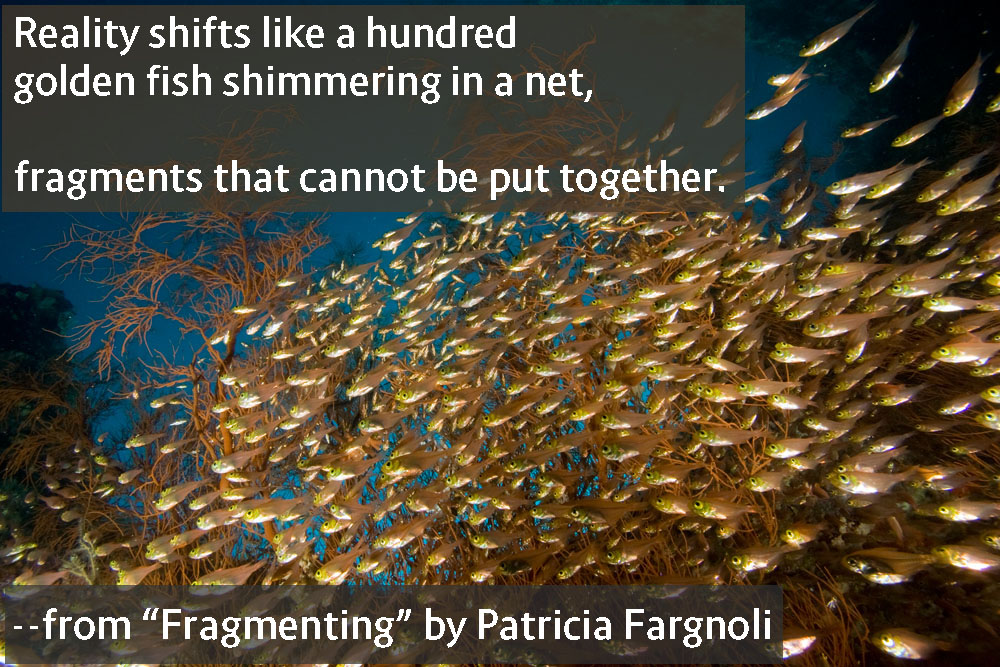
Amazingly, when I had finished the choosing and arranging, the poems from all the books seem to become a cohesive book….something that both surprised and delighted me.

Could you share a poem from the new collection?
To an Old Woman Standing in October Light
Better to just admit it, time has gotten away from you, and yet
here you are again, out in your yard at sunset, a golden light draping itself
across the white houses and mowed lawns,
the house-tall maple, green and rust in ordinary light,
has become a leaf-embossed, gold globe, the brook runs molten,
the clouds themselves glow gold as the heaven you used to imagine.
Do you know that your own figure, as Midas-touched as a Klimt painting,
has become part of that landscape falling around you,
almost indistinguishable from the whole of it–
as if eternity itself were being absorbed into your mortal body?
Or is it that your body, out of time, is merged into eternity?
You have been looking for a reason for your continued existence,
with faith so shaky it vibrates like a plucked wire.
Such moments of glory must be enough. As you search them out again, again,
your disappearing holds off for awhile. But see how, even in this present,
as you stand there, the past flies into the future seamlessly,
the way, above you, the crows are winging home again, calling to each other,
vanishing above the trees into the night-gathering sky.

[Buy Patricia Fargnoli’s book by clicking this link!]
How did this poem come about?
This is the first poem of the book.
The “you” in the poem is, myself as I stand at the precipice of old old age, but also it reaches out to the reader who may be also dealing with issues of aging and meaning.
I wanted to write a poem that used beautiful language and light and spirituality.

I don’t remember much of how I wrote it but I think I must have been in that poem-space where images and words come almost unbidden.

What advice were you given that was the most helpful when you were first showing your poems to others (in classes or workshops or critique groups?
It’s been 45 years since I first began showing others my poems and my memory is not that long.
I think the most important advice I could have been given is to be quiet and listen without getting defensive but, at the same time; to consider carefully all that is said.

Always remember that the poet is the final authority (and decider) about their own work.

Any really bad advice that didn’t help at all, and if so, how did you overcome it?
As for bad advice: negative critiques especially when given forcefully by someone who is sure their opinion is “right” have only left me upset afterwards.
These are not supportive and can be very difficult to shake these off.
I have left critiquing workshops where this happens frequently.

Fortunately, I have been a member for many years of a very supportive and helpful in-person workshop and also an online one where I trust the feedback I receive.

What advice do you have for poets who are struggling in some way–either with getting poems written or with getting published?
I know this is said often but it is so true: read, read, read…all the poetry (both American and International) you can get your hands on.

And study the poems that you are most drawn to, not just as a reader, but as a student learning from their techniques and moves, their language and strategies.

Also read fiction and non-fictions, read magazines, let all that you read become food for your own imagination.

Make writing a priority in your life, make time on a regular basis to do it even if you think you have nothing to say.

Study the journals before you send work to them in order to decide where you own work might fit.

Build a poetry community.
Some poets are loners, I, myself, am an introvert, but I have found that it’s important for me to have a tribe of poets, people I can turn to to talk about poetry, share successes, even moan about failures.

Thank you, Pat for bringing your beautiful, wise, and enlightening words to my blog.
Thank you readers for coming along.
Please check out more on Patricia Fargnoli here: [Patricia’s website]

Putting my own words on paper

and reading the words of others

are the 2 best ways I know how to cope with the awfulness happening in the world.
And just when I think it can’t get worse…

it does get worse.
But all the awfulness all around us — is us!

There are times even words, no matter how beautiful, fail to lift me from the abyss.

I know we must continue doing our best in the face of so much awfulness.

We must resist and persist and work to right wrongs.

But sometimes the scope of injustices breaks me .

Many people feel too much. Psychology Today called this “Reactive Empathy.”
But the trouble at the root of all this awfulness is a dearth of empathy?

A dearth of empathy allows us to judge and harm one another even though we are all the same.
Why isn’t empathy as hard-wired as hunger?

Has evolution failed the human race?
Wouldn’t empathy make us the most adaptive?

Isn’t empathy a better tool for survival of the species than apathy or self-interest?

I’m not thinking clearly.
Science befuddles me.
I know the answers are complicated.

Right now, I’m flailing in the abyss the world is.
Maybe words do help. A little.
I’ll grab onto these Vonnegut words right now and try to stop flailing.

I’m so excited to have my favorite Cozy Mystery author
and now dear friend
V. M. Burns visit me here on my blog.

She talks about how she came to write such wonderful mysteries

and gives fellow aspiring authors the wisdom of her experience.

Why cozy mysteries?
I’ve loved cozy mysteries for as long as I can remember.
From Encyclopedia Brown and Nancy Drew to Agatha Christie, I love reading and figuring out whodunit.

How did you come to write cozies?
The transition from reading cozies to wanting to write them was subtle.
I don’t recall saying, “one day, I’m going to write cozy mysteries.”
However, there were two glaringly obvious clues which pointed to career as a writer.

First, I mentally altered book/movie endings.
For as long as I can remember, I indulged in what I called, “my imaginings.”
If I finished a book and didn’t like the ending, I changed it.

If I watched a movie and thought the characters should have behaved differently, I “imagined” an alternative.
Or, if I read a book and wanted to know what happened next, I imagined the sequel.

At the time, I had no idea this would lead to a life as a writer.
I thought everyone came up with ideas for books/movies or thought out alternative endings and sequels.
Didn’t everyone standing in a crowded elevator imagine how someone could be murdered?

In addition to an active imagination, I also kept a mental “I wish there was a book” list.

I wish there was a book about a woman who owned a mystery bookstore who solved mysteries.
I wish there was a book about a policeman and his godmother who solved murders.
I wish…well, you get the idea.

One day, I told a screenwriter friend, one time too many, that she should write a screenplay about…
That’s when she suggested I should write it myself.

Once the seed was planted, I couldn’t dig it out.
I got every book I could find about writing.

Initially, I wrote screenplays and children’s books. I attended conferences and workshops and I wrote.
I completed four screenplays and two children’s books.
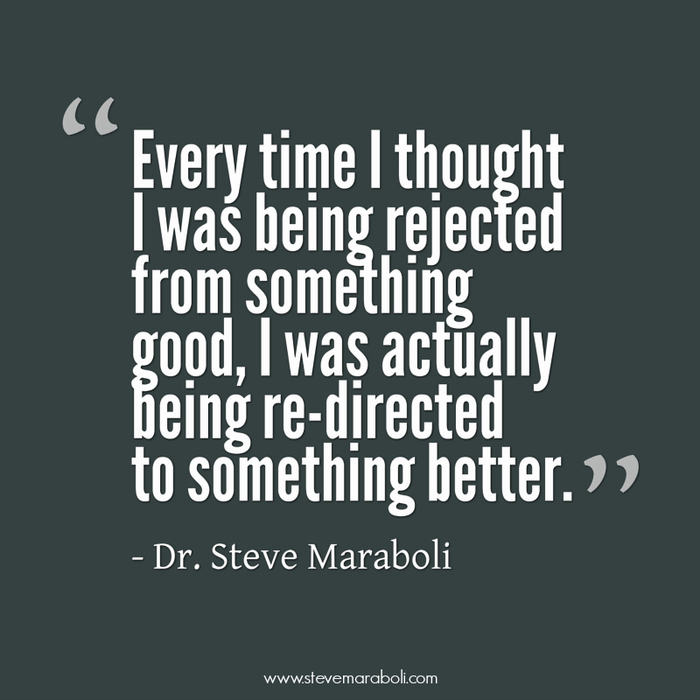
Unfortunately, no one was interested in producing my screenplays or publishing my children’s books. I got a lot of rejections.

I still read cozies and decided to write my first cozy screenplay, “Agatha and the Mysterious Museum Murder.”
Yep, no one was interested in that one either.
Hollywood is hard to break into, especially from Indiana.

A series of events led me to the Maui Writer’s Conference where I met book authors and publishers.

At the conference, I pitched an idea for a book to a big five publisher and guess what?
She liked it.
The only problem, I hadn’t finished the book. So, I went home and wrote my first cozy mystery.
Thankfully, I write quickly. So, I finished the book and thought, my road to publication was secure.

Uh…no. The publisher only accepted manuscripts submitted by an agent.
I sent queries to agents and got rejection after rejection.

Eventually, I got an agent who sent my manuscript to the big five publisher, who rejected my manuscript.

How did you keep going in the face of rejection upon rejection?
At this point, I knew what I wanted to do with my life.
I wanted to be a mystery writer.
So, I continued to send queries.

What was your road to publication like?
“I revised my manuscript and I wrote the next book in the series.

Years passed and I racked up a lot of rejections.
Obviously, I needed to do something different.
One day, while glancing at the bio of one of my favorite cozy mystery writers, Victoria Thompson, I noted she was an adjunct professor at Seton Hill University in Greensburg, PA.
Ever heard of it? Me neither.

A little research showed that Seton Hill had a low residency MFA program in Writing Popular Fiction.
I applied and was accepted. That’s where I found my Tribe.

I learned how to write and I rewrote my book.
Since I write quickly, I even started a new mystery series (Mystery Bookshop Mystery).
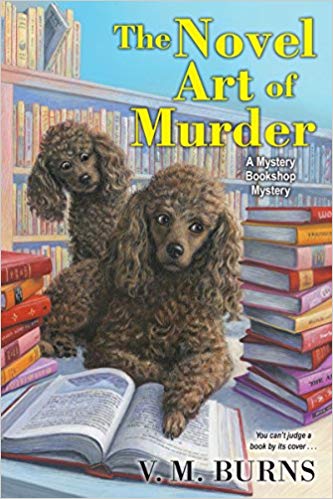
MFA degree in hand, I sent queries to agents, editors and publishers and guess what?
I got more rejections.
Nevertheless, I kept writing.

Eventually, I got an agent who sold the second manuscript to a publisher who asked if I’d write a proposal for another mystery series.
Heck, yeah.

I also sold my first book to a different publisher.

When all was said and done, I was under contract to write fourteen books!
Yes, you read that correctly, 14!

What advice would you give other aspiring writers?
So, what’s the key to my publication success?
I kept writing. I didn’t give up because of a rejection or two or three hundred.
My road to publication was long and rocky with lots of bends, but persistence pays off.

My advice to aspiring authors, don’t give up and no matter what happens, just keep writing.

V. M. Burns author page — check out V. M. Burns’ author page to see all her books!
And check out her own blog here V. M. web site
August is the month of the annual Poetry Postcard Fest,
brainchild of Seattle poet Paul Nelson.

In 2007, I was lucky enough to give Paul an assist on getting the first project started.
Back then, about 100 people from all over the country participated.
11 years hence, there are several hundred participants from all over the world.

But it’s been a long while since I participated.
I joined in this time because my current poetry project has been a bust so far.
I’ve written nothing I’m satisfied with. At all.

I wanted the challenge of having to write a single draft of a poem quickly, then send it off right away.
There’s pressure in knowing you only get one shot–but freedom from perfectionism too.

I bought a pack of random postcards.
I pull out a card, turn it over, and begin to write.

My only constraint (aside from the poem needing to fit in the small space)
is that the poem must have something to do with the concept of time.

It’s been quite crazy having to figure out how to work time into a poem about a giraffe or a monkey.
Even though it feels like I am writing in a vacuum, the poem is a missive to my audience of one.

Some of the poems came swiftly, without setting my pen down once.
Some of the poems have taken a bit more time.
But nearly all are silly, in some way.

Rarely, if ever, do I allow myself to just be silly.
And you know what, I can’t figure out why. It’s actually a lot of fun.
It’s okay not to take every endeavor so seriously.

Participating in the August Poetry Postcard Fest is reminding me that it’s okay to write mediocre poems.
It’s even okay to write bad poems.
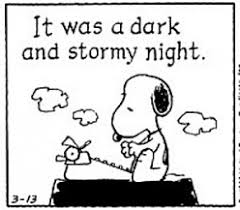
As long as the postcard poems make the recipient smile, that’s good enough.
And good enough is sometimes good enough.

And I think there is a larger lesson in this postcard experience for me–
just write!
No matter what happens on the page, just write.

And don’t aim for perfection.
Just aim to put words on paper.
It seems like I knew all of this before, but I keep forgetting, and keep needing to remind myself.

I can fix the words later.
Or let the words go and write some more.
And some more.

And eventually, I might even write something I like enough to hold onto.
